By Dan, GSR US team. Published .
Often, yes. A golf simulator shed is usually bigger than the size most US towns let you build without a building permit, and it needs electricity, which can bring a permit of its own whatever the size. The rules are set locally, so the only firm answer for your yard comes from your city or county building department.
This guide shows you where the common size limits come from, how GSR's three shed sizes compare with them, why the power supply matters more than the footprint, and what to have ready when you call your building department. Read it before you order a building, not after.
Why the answer depends on where you live
There is no single national permit rule for backyard buildings in the US. Each city or county decides what needs a permit, and most base their rules on a model code, then change the parts they want to.
The model most places use for homes is the International Residential Code, published by the International Code Council. The ICC says the code is in use or adopted in 49 states, and that each jurisdiction adopts it through its own laws, sometimes with amendments. That is why a neighbor two towns over may have built a shed with no paperwork while yours needs a permit.
The two size limits you will see most
The residential code lets a small one-story detached accessory structure go up without a building permit. In the current code the limit is 200 square feet of floor area. Federal Way, Washington is a typical example. It lists one-story detached accessory structures of up to 200 square feet as exempt, citing that section of the code, and warns that separate permits may still be needed for exempt work. It also says the exemptions do not apply in critical areas such as wetlands, streams and landslide hazard areas.
Many places use a smaller figure. The City of Oakland, California requires a building permit for an accessory structure over 120 square feet. It requires one at any size when mechanical, electrical or plumbing work is involved, and it still reviews zoning when no building permit is needed.
So the number to look for on your own building department's website is usually 120 or 200 square feet. Some towns set a different figure, and some add conditions on height, distance from the property line or the land the shed sits on. Ask how the floor area is measured, too. A building that sits right on the limit can fall either side of it depending on whether the town measures inside or outside the walls.
How GSR's golf sheds compare with those limits
GSR builds golf sheds in three sizes. Multiply the two sides to get the floor area.
- Small, 10′ × 16.6′, is about 166 sq ft. It is under a 200 sq ft limit and over a 120 sq ft one.
- Medium, 13.3′ × 20′, is about 266 sq ft. It is over both common limits.
- Large, 16.6′ × 23.3′, is about 387 sq ft. It is over both common limits.
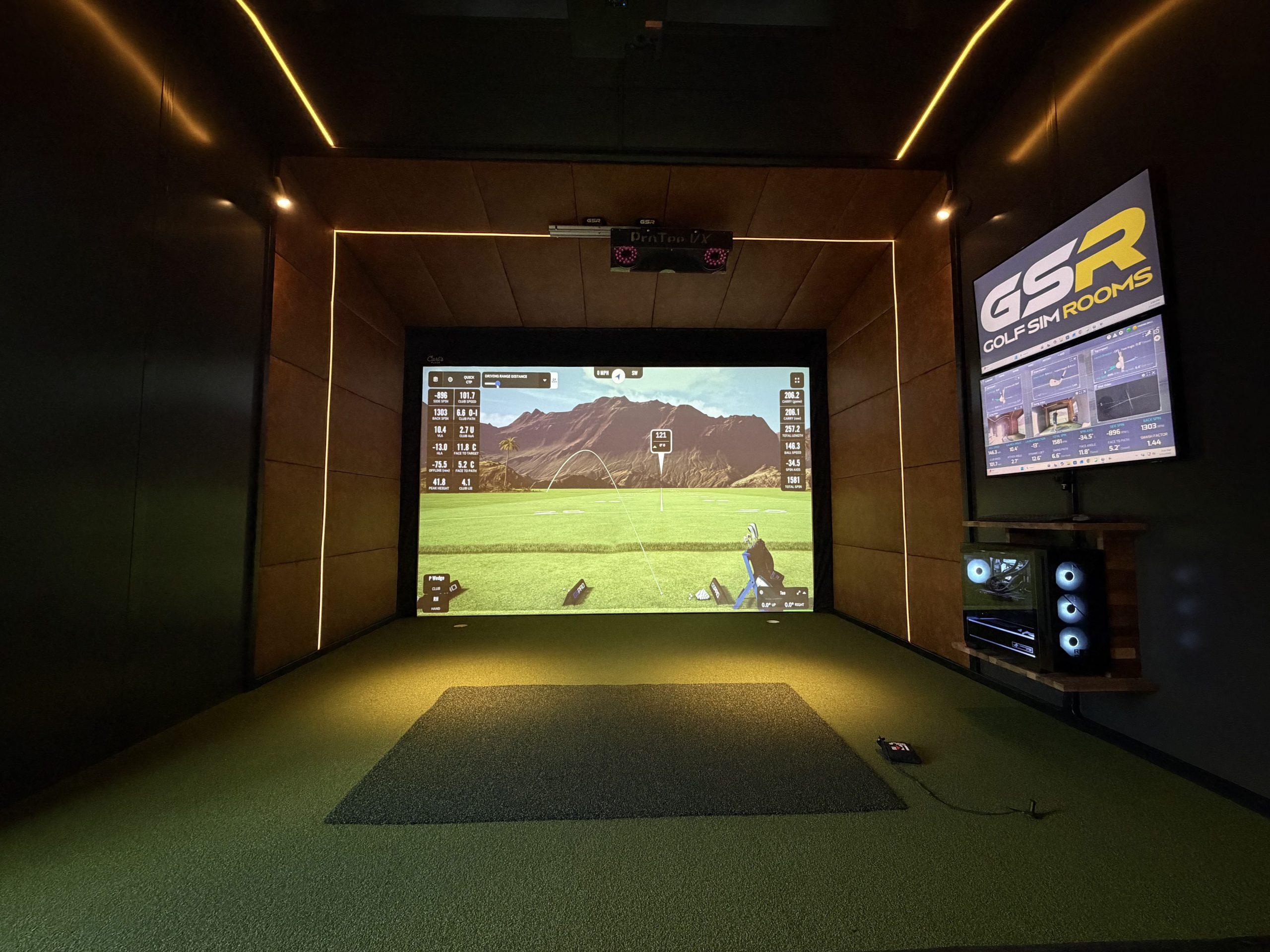
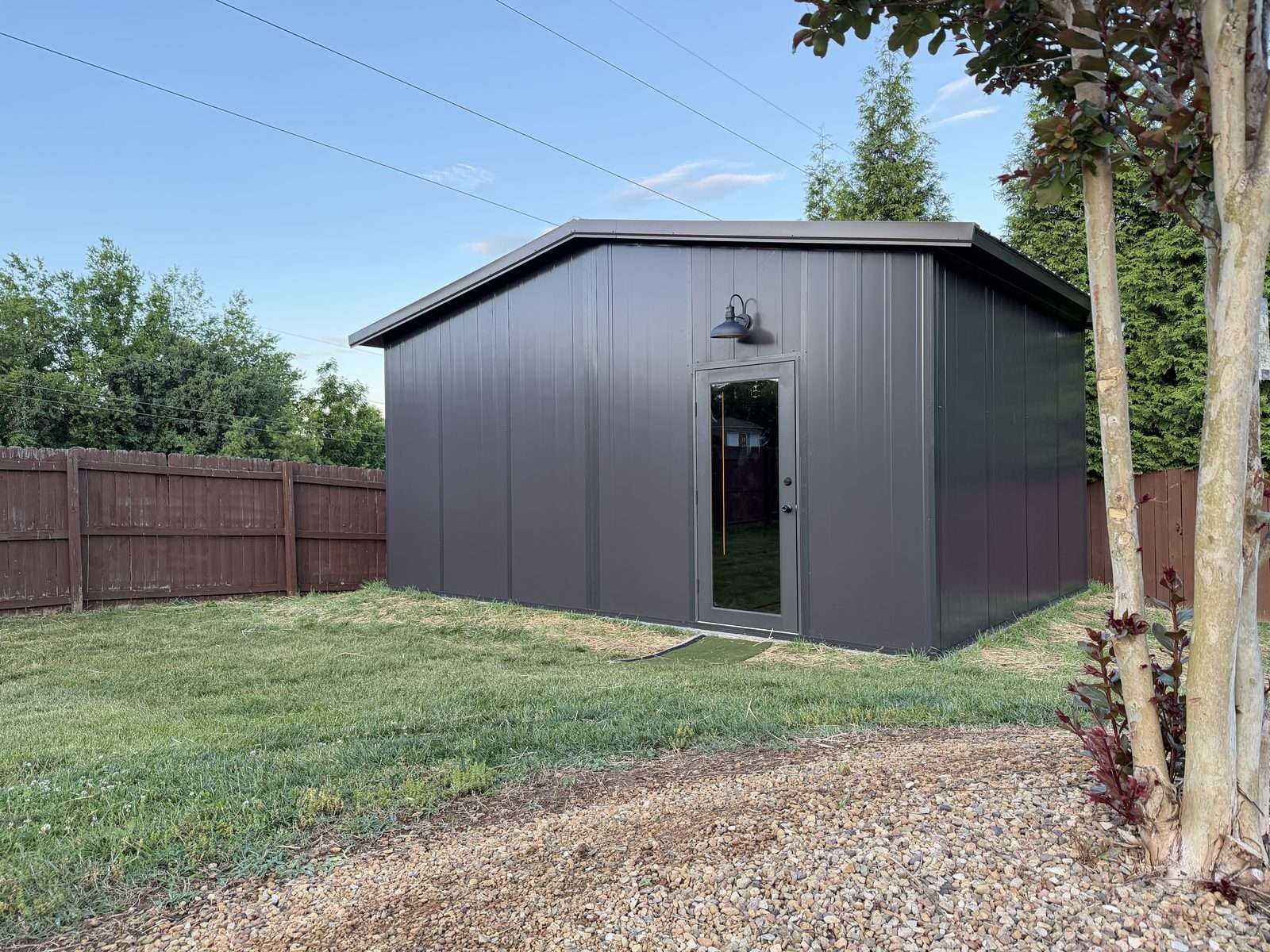
The golf shed GSR built in Lafayette, Louisiana is 14′ × 20′, which is 280 sq ft. Inside there is a simulator bay with a wood-framed screen and amber LED lighting, and room for a sofa beside it.
Even the Small shed only clears the size limit where that limit is 200 sq ft, and only for the building permit. The simulator inside still needs power, which is where most of the permit questions come from.
Why the power supply matters more than the size
A golf simulator runs on electricity. A GSR golf shed comes with external lighting, two 43″ 4K displays, a soundbar and all the AV and data cabling, and you add a launch monitor, a projector and a gaming PC. All of it needs mains power brought out to the shed from your house.
Running power to an outbuilding is electrical work, and many towns want a permit for it however small the building is. Oakland is one. Electrical work there needs a building permit even for a structure under its 120 sq ft limit. If you also want heating and cooling, such as a mini-split, that is mechanical work, which Oakland treats the same way.
If the cable runs underground, someone will be digging a trench. Contact 811, the free national call-before-you-dig service, a few business days before any digging starts, so buried utility lines are marked first. The same goes for any footings.
For most golf simulator sheds, the safe assumption is that the electrical work needs a permit and that the building may need one too. Then let your building department tell you otherwise.
Zoning, setbacks and HOA rules apply either way
A building permit and zoning are two different things. The building permit is about how the structure is built. Zoning is about where it can go and how big it can be on your lot. Oakland reviews zoning for accessory structures even when no building permit is needed.
Expect zoning to ask how far the shed sits from your property lines and from the house, how tall it is, and how much of the lot it covers. A shed that needs no building permit can still be in the wrong place.
If your home is in a community with a homeowners association, read its rules as well. An HOA can have its own rules on outbuildings, materials and colors, and its approval is separate from the city's. Ask before you order, not once the panels arrive.
What to have ready when you call your building department
Give the department these facts when you call or email, so it can answer for your lot rather than in general.
- Your address, so they can confirm which rules and zoning apply.
- The shed's outside dimensions, floor area and height.
- Where it will sit, with rough distances to the property lines, the house and any fence.
- Whether it will have power, and whether you want heating or cooling.
- Whether anyone will dig a trench or footings.
Then ask four questions. Does a building of this size need a building permit? Does running power to it need an electrical permit? Which setbacks apply on my lot? Will there be inspections, and when? Write the answers down with the name of the person you spoke to.
Every GSR project in the US starts with a phone consultation that covers what you want from the room, how you will use it, its dimensions, your budget and the technology. Settle the size there, and you will have exact figures to take to your building department.
When a golf shed is not the right answer
Sometimes the rules make a backyard building harder than it is worth. A small lot with deep setbacks may leave no spot big enough for a full swing. For a full swing GSR plans for a space at least about 10′ wide, 15′ deep and 9′ high, and around 11.5′ × 16.5′ with a 9.5′ ceiling is more comfortable.
If your yard cannot take a building that size, look at the space you already have. A garage conversion or a spare room or basement fitted out as a golf simulator room needs no new building at all, though running new power there may still need a permit. Spending on a shed you cannot get approved is money you will not see again.
Conclusion
Whether a golf simulator shed needs a permit comes down to your town's size limit, usually 120 or 200 square feet, and to the power it needs, which many towns treat as permit work at any size. Zoning and any HOA rules apply on top. Check all three with your local building department before you order, and keep a note of what they tell you.
If you are planning a golf shed, start your project with Golf Sim Rooms. Tell us your yard's dimensions and your state, and our US team will help you choose the size that suits your space. Most inquiries get a reply within one business day.